Under the current YouTube AI Monetization Policy, published in 2026, YouTube pays for AI-generated video if the content is original and disclosed. Here's the exact policy, what gets demonetized, and what AITube has to offer to creators as an alternative.
If, like almost all new AI content creators, you have the same question, Can YouTube pay for AI-generated videos too? the answer is yes. According to the updated 2026 policy, YouTube pays for AI-generated video through the YouTube Partner Program (YPP), provided the content shows genuine human input and, where relevant, discloses that it is altered or synthetic. Thus, YouTube does not demonetize content for being AI-made. However, it demonetizes content for being mass-produced, templated, or low-value, which AI just makes easier to do at scale.
The short version: yes, YouTube pays for AI-generated video. Here are the key points to keep in mind:
YouTube doesn't ban AI-generated videos.
AI videos can join the YouTube Partner Program, as long as they're original and policy-compliant.
YouTube clarified its AI monetization policy in July 2026, splitting inauthentic content into three categories.
AI content doesn't automatically earn less per view — RPM tracks quality and watch time, not the production tool.
What Counts as an AI-Generated Video?
Before we go any further, let's clarify the concept of AI-generated video and what the difference is between AI-generated video and AI-assisted video, because it confuses even experienced creators.
A fully AI-generated video is one where a machine does practically everything. It includes the script, the voice, the visuals, sometimes even the editing decisions, with a human basically just hitting "publish." For instance, consider faceless channels that pump out a dozen near-identical explainer clips a day using an AI video generator, stitched together from stock footage and a synthetic voiceover.
AI-assisted content, on the other hand, is where a real person gives input. You brainstorm ideas, write the script, add personal commentary, and choose the shots. However, you use AI tools to speed things up. Maybe AI helps you draft an outline, clean up your audio, or generate a cartoon-style animation, AI-generated cartoon videos made from your own concept. The human fingerprint is still all over it.
What Kind of AI-Generated Videos Get Paid on YouTube?
The Content Must Be Authentic
First, as stated above, YouTube does pay for AI-generated videos, but only when there's real, meaningful human input behind them. Purely automated, copy-paste content is a different story entirely. In other words, what YouTube actually pays for is AI-assisted content and not completely AI-generated content that has no human authenticity. That is why YouTube has updated its AI monetization policy to the Inauthentic Content Policy.
But what does "inauthentic content" actually mean? In its official policy changelog, in mid-2025, YouTube stated it made a minor update to its "repetitious content" policy to better clarify that this includes content that is repetitive or mass-produced. According to the platform, it is only the name that changes, from "repetitious" to "inauthentic," and this type of content has always been ineligible for monetization under its existing rules rewarding original work. So, it is not a new AI-specific restriction.
Nevertheless, in July 2026, YouTube went a layer deeper. Matt Halprin, YouTube's VP of Trust & Safety, walked through the update on a podcast with Creator Insider host Rene Ritchie. According to that discussion, the updated guidance splits inauthentic content into three named categories:
Generic or template-based content
Videos built from AI, CGI, or reusable templates are nearly identical to each other with minimal originality. YouTube discourages those videos and does not allow their monetization.
Off-putting or distressing content
Likewise, material viewers find manipulative, distressing, or unpleasant enough that it drives them away from the channel or the platform is rejected by YouTube. According to YouTube's policy, such videos are only designed to get a reaction and have no benefit for viewers.
AI personas on sensitive topics
Synthetic hosts or avatars discussing health, finance, legal, or medical subjects without the accountability a real, identifiable source would carry are never welcomed. Such content also includes realistic AI content, like a deepfake, that is shown without a label. If a video could be mistaken for something real, and it is not real, YouTube expects a disclosure.
Halprin also addressed the tool-versus-content question directly. YouTube treats the policy as agnostic to production method. A video made with generative AI is judged by the same originality standard as one made with a camera, CGI, or stock footage.
The Content Must Fulfill YouTube Partner Program (YPP) Conditions
To get your content monetized, your channel still has to meet the usual threshold per the YouTube Partner Program.
Now, what exactly is YPP (YouTube Partner Program)? YPP is basically YouTube's official membership that lets creators earn money from their channel. You cannot get your content monetized by YouTube until you have entered the YPP program, no matter how much quality content you are uploading. Now again, YPP is not only for AI-generated videos; it has always been there for original content creators too. Here is how YouTube's YPP works.
First, you need at least 1,000 subscribers AND either 4,000 valid public watch hours in the past 12 months, OR 10 million valid public Shorts views in the past 90 days. So, does YouTube pay for AI-generated Shorts? Yes, it does if the given criteria are met.
Once you hit those numbers, YouTube reviews your channel manually, checking your videos, community guidelines history, and whether your content follows their policies (including the AI/inauthentic content rules). If approved, you connect an AdSense account, and YouTube starts running ads on your videos, splitting the revenue with you.
Remember, YPP is not a one-time approval. YouTube keeps monitoring your channel. If your content later breaks the rules, like mass-producing AI slop, YouTube can pause or remove your monetization even after approval.
The Content Must Be Explicitly Disclosed as "Synthetic or Altered"
If your video is significantly AI-generated or alters reality, like a realistic AI-generated scene or a synthetic voice or face, YouTube, from March 2024, requires you to toggle the "altered or synthetic content" label in YouTube Studio when uploading. It is now a real requirement, not just a suggestion, to notify viewers of videos meaningfully altered or synthetically generated in a way that might confuse or deceive them. YouTube says that the purpose of these new requirements is for creators to disclose to viewers when realistic content (content a viewer could easily mistake for a real person, place, scene, or event) is made with altered or synthetic media, including generative AI.
The label exists to keep viewers informed, not to punish you, and it will in no way affect the monetary value of your video. To indicate that your video has altered content that requires disclosure, you should follow these steps.
While uploading a video on YouTube, before you publish it, select the video from your list of "Channel Content" and click on "Details" from the left navigation bar. A "Video Details" list will be visible, including the title, description, etc. By clicking "Show More," you'll also see options under the category "Altered Content." Select "YES," and your video will include a label in your video description saying that the content has been altered or is synthetic.
Does YouTube Ban AI Content if Not Disclosed?
Non-disclosure isn't a warning-and-forget issue. It runs on a defined escalation path.
Step 1 — Warning You get told what went wrong, so you can fix it.
Step 2 — 90-day suspension If it happens again, your channel loses monetization for 90 days.
Step 3 — Removal If the problem keeps repeating, you lose your spot in the YouTube Partner Program for good.
Are AI-Generated Videos Monetized Equally Around the Globe?
If you're wondering about eligibility by region, whether YouTube pays for AI-generated videos in India, South Africa, or Canada, the underlying monetization rules are the same everywhere. YouTube does not have one policy for AI content in the US and a different one in India, South Africa, or Canada.
What genuinely differs from country to country isn't your eligibility, but your payout rate, measured by revenue per view (RPM) and ad impressions rate (CPM). An average CPM rate for a channel from Tier-1 regions (US, UK, Canada, Norway) ranges from $12 to $55, whereas the average CPM rate for a channel from Tier-3 regions (e.g., India, Pakistan, Nigeria) varies from $0.80 to $4.50. The same holds true for genuine content too.
So, can YouTube pay for AI-generated videos? Absolutely. Does YouTube pay for AI-generated Shorts specifically? Yes, the same principles apply to Shorts as to long-form uploads. Originality and disclosure are what count, not the video's length.
Is YouTube the Only Vehicle for AI Content?
Skeptics in the digital publisher space often argue that relying solely on YouTube AdSense for AI content is a high-risk, low-margin strategy due to shifting platform policies. But can AI videos be monetized on Instagram? Or does AI-generated content get monetized on TikTok? In fact, almost all platforms now are moving towards AI content payments, provided the creators follow the platform's content and disclosure guidelines, though Instagram's and TikTok's monetization programs are generally less standardized than YouTube's Partner Program. Nonetheless, the takeaway across the board is that transparency and genuine creative input are becoming the industry standard, not just a YouTube quirk.
Why Some AI Creators Are Diversifying?
YouTube's AI rules are patches added onto a platform that was built for human creators back in 2005. The three-step warning system, the disclosure toggle, the inauthentic content policy all of it was added later, on top of a system that was never designed with AI creators in mind. So, it is understandable that creators worry YouTube can redraw category boundaries whenever advertiser sentiment shifts, and creators typically find out through a podcast interview or a quietly updated help page, not advance notice.
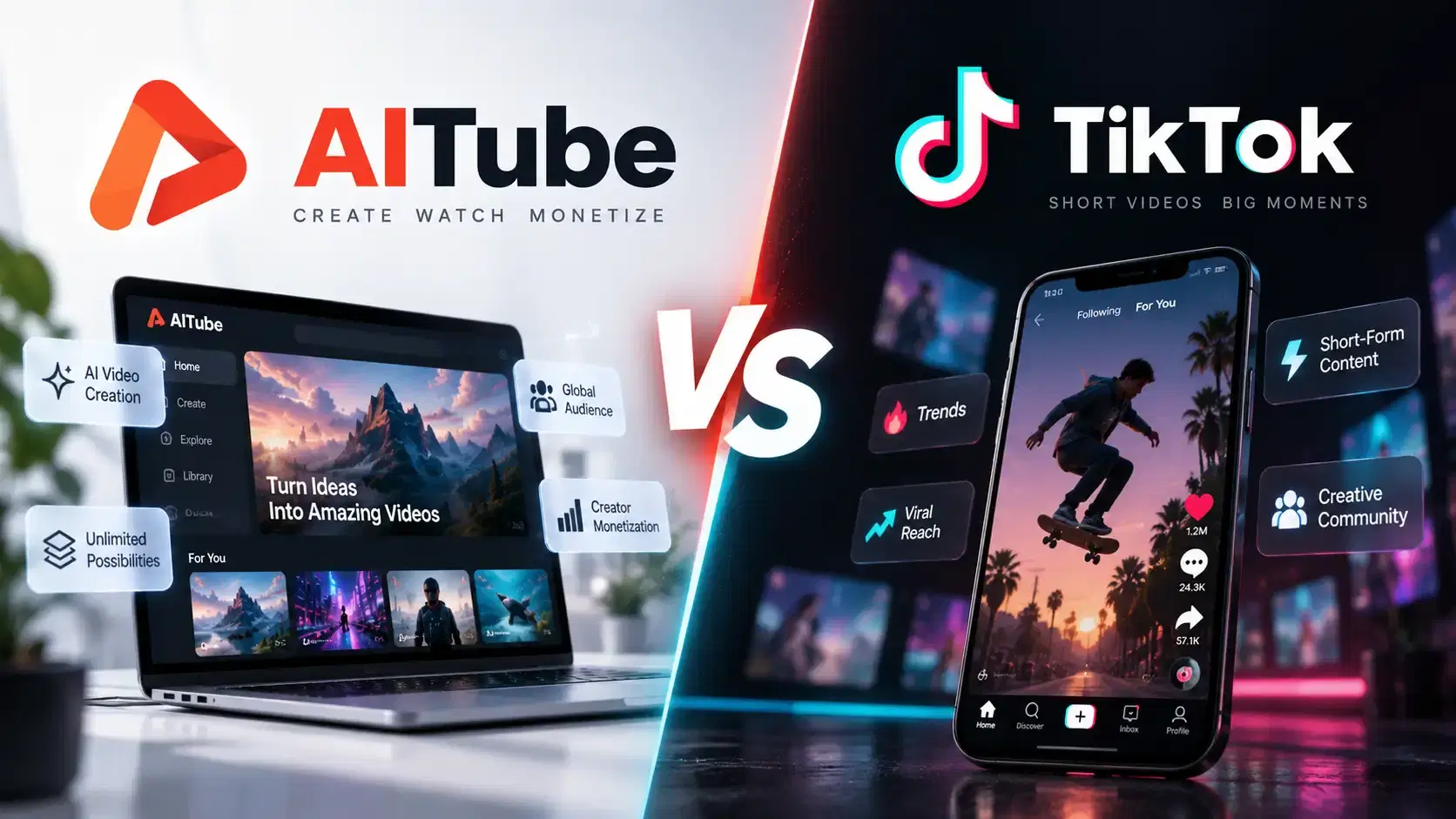
AITube takes a different approach. At AITube, the monetization model is designed around AI-generated content from the start, rather than AI content trying to fit inside policy written for a pre-AI platform. If you're tired of guessing where the next policy update might land, it's worth exploring how creators earn on AITube. You can also create AI videos without worrying about platform rules using AITube's built-in tools, or jump into Prompt Battles to test your prompting skills against other creators.
Bottom Line
To wind up, does YouTube pay for AI-generated videos? Yes, genuinely, unmistakably yes. However, there must be a real person steering the creative direction, adding original value, and being upfront with disclosures where needed. What YouTube won't pay for is the lazy stuff, like recycled templates, manipulative emotional bait, and AI "experts" doling out advice on topics that actually matter. The line isn't about the tool you use; it's about the effort and honesty behind it. Keep that principle front and center, stay current with policy updates, and there's no reason your AI-powered channel can't thrive right alongside the traditional ones.