Key takeaways
The split that matters is one-time effort versus recurring income: channels and courses keep earning after you stop; client work and stock pay closer to the hours you put in.
Faceless YouTube channels are the fastest start for beginners, but most people earn nothing for the first three to six months before income compounds.
You need four tool categories to produce a sellable video: a text-to-video generator, a voiceover tool, a video editor, and a thumbnail maker.
Validate one channel or client before scaling, then clone the proven system rather than starting new ideas.
Reused or lightly edited AI content triggers reused-content strikes and demonetization, so edit, structure, and add original narration.
What are the best ways to make money with AI videos?

There are six reliable ways to make money with AI videos: running faceless YouTube channels, selling stock footage, building and selling templates, doing client work, publishing affiliate content, and teaching courses. Each pays differently and demands a different amount of effort. The fastest to start is rarely the fastest to pay, so match the method to how much time you can put in now versus later.
The split that matters is one-time effort versus recurring income. A YouTube channel or a course keeps earning after you stop working on it. Client video work and stock uploads pay closer to the hours you put in.
The six main revenue methods compared
Faceless YouTube channels — low upfront cost, slow start. Earnings compound once the channel qualifies for ad revenue, and it runs without you on camera. Covered step by step in the next section.
Stock footage — upload AI clips to stock libraries and earn per download. Low effort per clip, but income per asset is small and depends on volume.
Selling templates — package reusable video setups for other creators to buy. High effort to build well, strong margins once a template sells repeatedly.
Client video work — make explainers, ads or social clips for businesses. Highest pay per project and fastest cash, but it caps at your available hours.
Affiliate content — review tools or products in video and earn commission on sign-ups. Medium effort, income tracks your traffic and the payout per sale.
Courses — teach a skill you already have, such as AI video production itself. Heavy upfront work, then recurring sales with almost no marginal cost.
Pick one to start, not all six. Client work and affiliate content bring in money soonest if you need cash this month. Channels, templates and courses pay more over time once the groundwork is done. Many creators who make money with AI videos stack a slow method on top of a fast one — freelancing to cover bills while a faceless channel grows in the background. The same AI output that fills a YouTube channel can be repackaged for short-form AI dramas or micro-content elsewhere, so one pipeline can feed several of these methods at once.
How to start a faceless YouTube channel with AI video
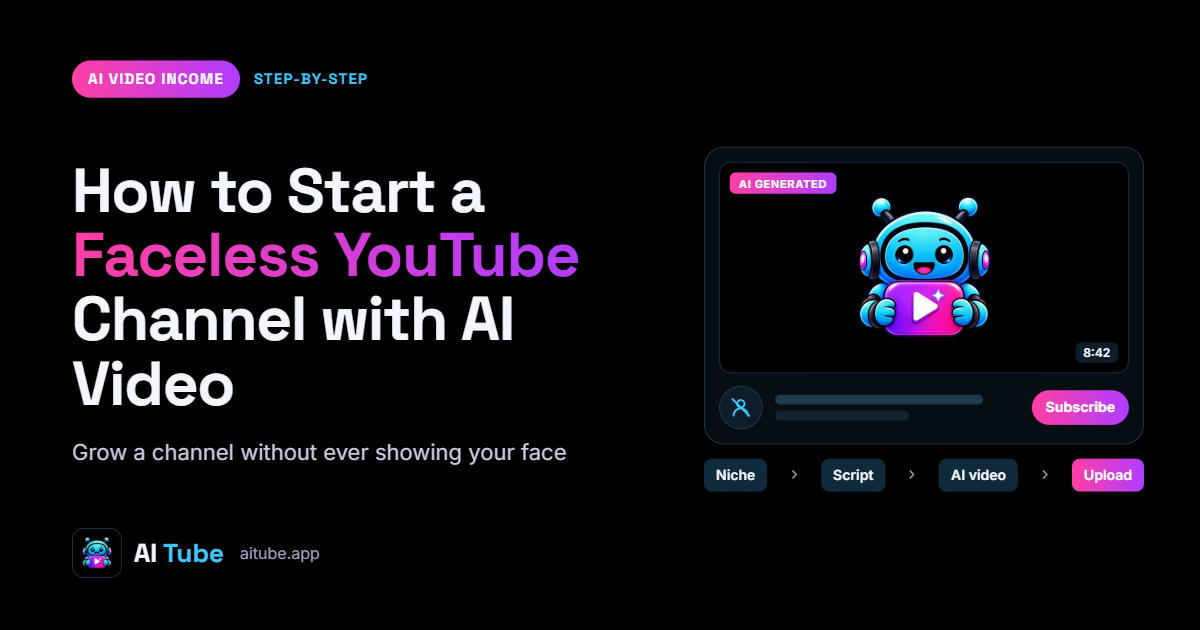
A faceless YouTube channel is the fastest way for beginners to make money with AI videos because you never appear on camera, you batch production, and one script can become dozens of videos. Pick a niche where viewers reward information over personality: finance explainers, history breakdowns, horror narration, product reviews, or mindfulness content. Narrow beats broad — "debt payoff strategies" earns more than "money tips" because advertisers pay more for a focused audience.
Once the niche is set, the production loop is the same every time. Write or generate a tight script, convert it to voiceover, pair it with AI-generated footage or B-roll, then edit, caption, and upload. Keep early videos between 6 and 12 minutes so you can run mid-roll ads later.
The step-by-step process
Pick one narrow niche and confirm search demand by typing seed topics into YouTube and checking autocomplete and existing view counts.
Script a 1,000–1,500 word video around a single question a viewer would type, with a hook in the first 15 seconds.
Generate a voiceover with an AI text-to-speech tool, then create matching visuals with an AI video generator (the next section covers which tools to use).
Edit everything together, add burned-in captions, a custom thumbnail, and a title that repeats the searched question.
Upload consistently — aim for two to three videos a week to feed the algorithm and build a catalogue.
To turn views into income, meet the YouTube Partner Program bar: 1,000 subscribers plus either 4,000 valid public watch hours in 12 months or 10 million Shorts views in 90 days. Volume and consistency get you there faster than any single viral attempt. Reused or low-effort AI content can fail review, so edit, structure, and add original narration rather than uploading raw generated clips.
Which AI video tools should you use to earn money?
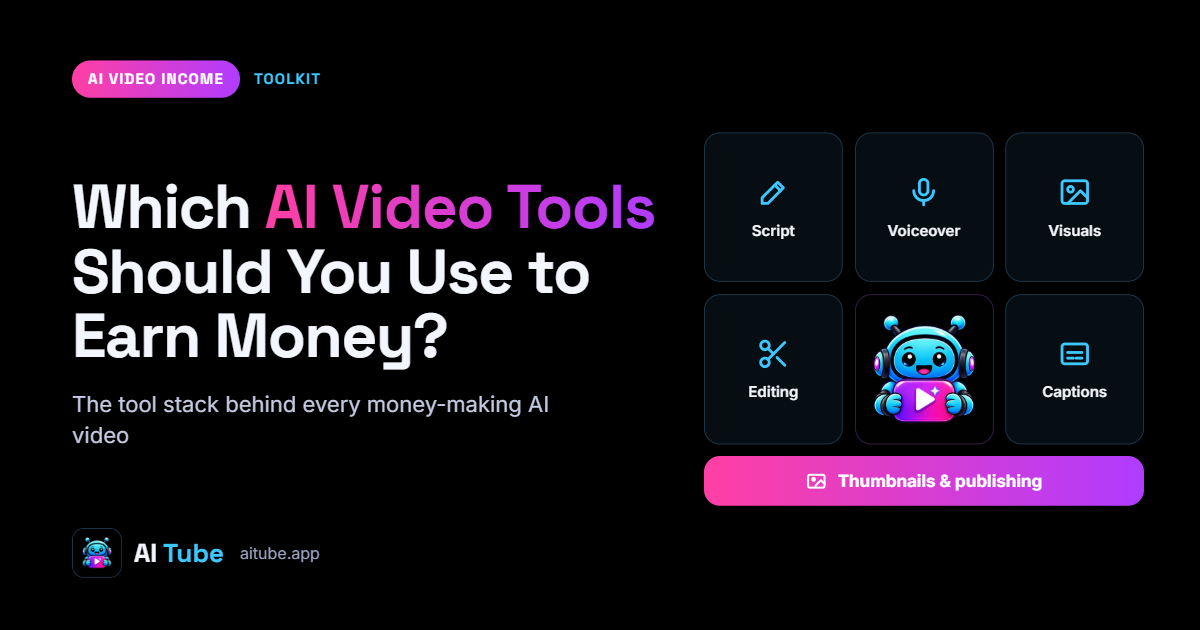
To make money with AI videos you need four tool categories working together: a text-to-video generator, a voiceover tool, a video editor, and a thumbnail maker. Pick one from each and you can produce a sellable video end to end.
Start with the output you plan to sell and work backwards. A faceless commentary channel leans hard on voiceover and editing; a cinematic short-film channel leans on the text-to-video generator. Don't pay for capability you won't use.
The four tool categories you actually need
Text-to-video generators turn a script or prompt into moving footage. Use these for b-roll, scene generation, or full AI shorts.
Voiceover tools convert your script to a natural-sounding narration. This is the make-or-break layer for faceless content, so prioritise voice quality over feature count.
Video editors stitch clips, add captions, trim pacing, and sync audio. Captions alone lift watch time, so an editor with auto-captioning saves hours.
Thumbnail makers create the click. A weak thumbnail sinks a strong video, so treat this as a real step, not an afterthought.
Should you use free or paid AI video tools?
Use free tools to validate the format, then pay only where the free tier blocks you from selling. Free tools usually watermark output, cap resolution, or limit render length — all three hurt you on a monetised channel. The moment a watermark appears in footage you want to earn from, that tool has become worth paying for.
Upgrade one tool at a time rather than buying a full paid stack on day one. Watch which step slows you down most — often editing or voiceover — and spend there first. Once you know how much you can earn, covered in the next section, reinvesting in better tools is straightforward.
How much can you realistically earn and how to scale
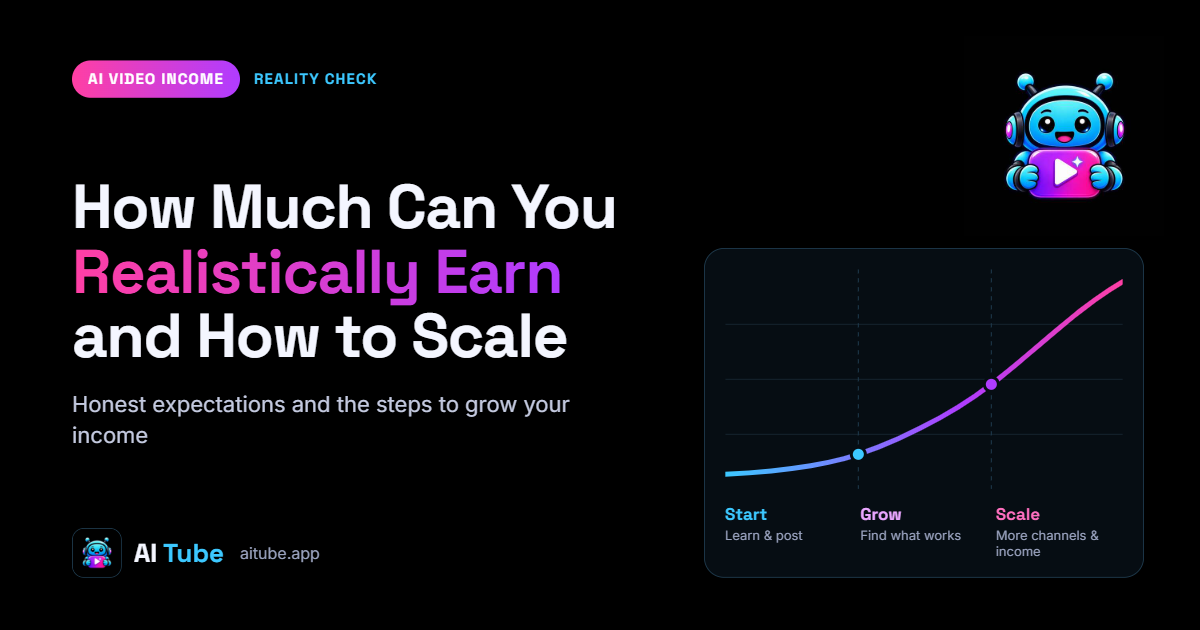
Most people who make money with AI videos earn nothing for the first three to six months, then see income ramp slowly as their catalog and audience compound. Treat early output as inventory, not instant revenue. A single video rarely pays much; a library of 100 that keeps earning while you sleep is where the real money sits.
Expect a lag between effort and payout. YouTube ad revenue requires crossing the Partner Program threshold before a cent arrives, and client work depends on how fast you can prove results and raise your rates. Build for the slope, not the first week.
What mistakes kill your payouts?
Reused or lightly edited stock that triggers reused-content strikes and demonetization
Publishing sporadically, so the algorithm never learns who your videos are for
Chasing low-value topics with no advertiser demand, which crushes your per-view rate
Ignoring platform rules on AI disclosure, which can pull videos down before they earn
Spreading yourself across five channels before one proves it can pay
Validate one channel or one client before you scale. You need proof that a format earns reliably — a niche, a video length, a thumbnail style that converts — before you multiply it. Scaling a broken system just multiplies the losses.
How do you scale from one to many?
Systematize the winning format into a repeatable template so each video takes less time
Batch production, then schedule releases to keep a consistent upload cadence
Hire or delegate scripting, voiceover and editing once the margins support it
Clone the proven system into a second channel or second client, not a brand-new idea
Reinvest early earnings into better tools and more output rather than cashing out
The operators who earn the most run several channels on the same tested playbook. One channel teaches you the economics; a portfolio turns those economics into real income.