Introduction
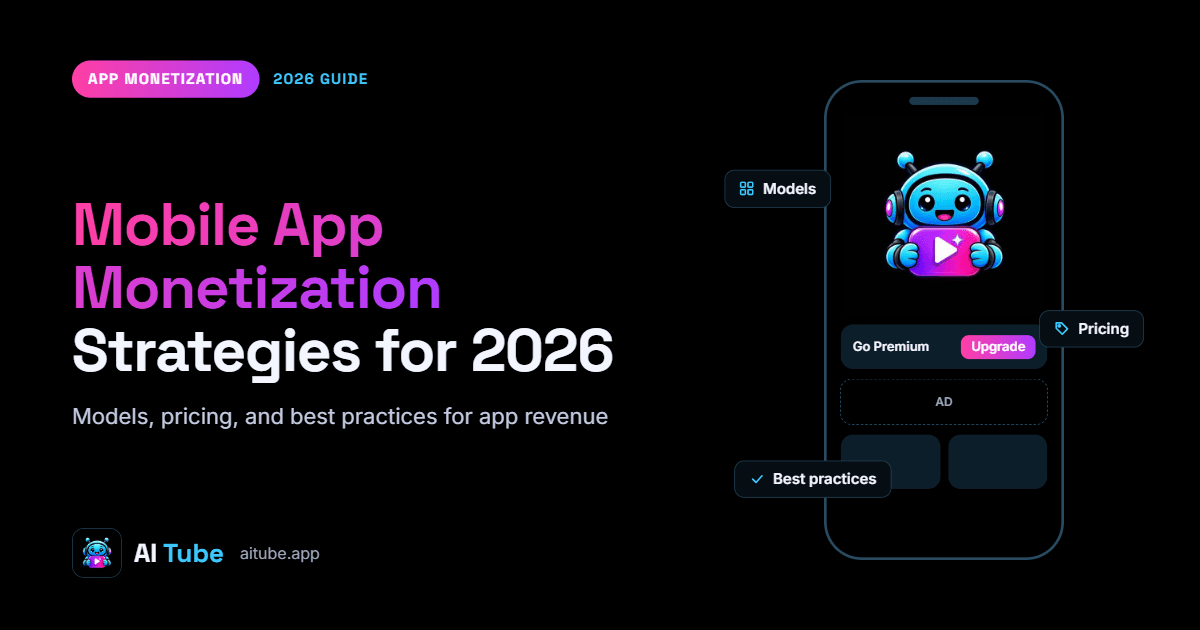
Building a mobile application is only the first step toward creating a sustainable business. After launch, developers need to attract users, encourage regular engagement, and decide how the app will generate revenue. A well-designed monetization strategy helps cover development and operating costs while giving users a fair reason to pay.
Mobile app monetization means generating revenue from an application through methods such as advertising, subscriptions, in-app purchases, paid downloads, commissions, or premium features. The best approach depends on the app’s purpose, audience, usage frequency, and the value it provides.
In 2026, app owners should think beyond installing an ad network or placing a payment button inside the interface. Sustainable monetization requires a clear value proposition, a smooth user experience, transparent pricing, and continuous measurement.
This guide explains common app monetization models, how to choose between them, and what to measure after launch.
What Is Mobile App Monetization?
Mobile app monetization is the process of turning an application’s value and user activity into business revenue. A productivity app might charge a monthly subscription, a game might sell optional virtual items, and a free utility might earn through advertising.
Monetization does not necessarily mean charging every user. Some apps attract users through a free experience and generate revenue from a smaller group that pays for additional value. Others charge all users upfront or earn commissions when users complete transactions.
The goal is to find a model that supports the business without damaging trust or making the app difficult to use.
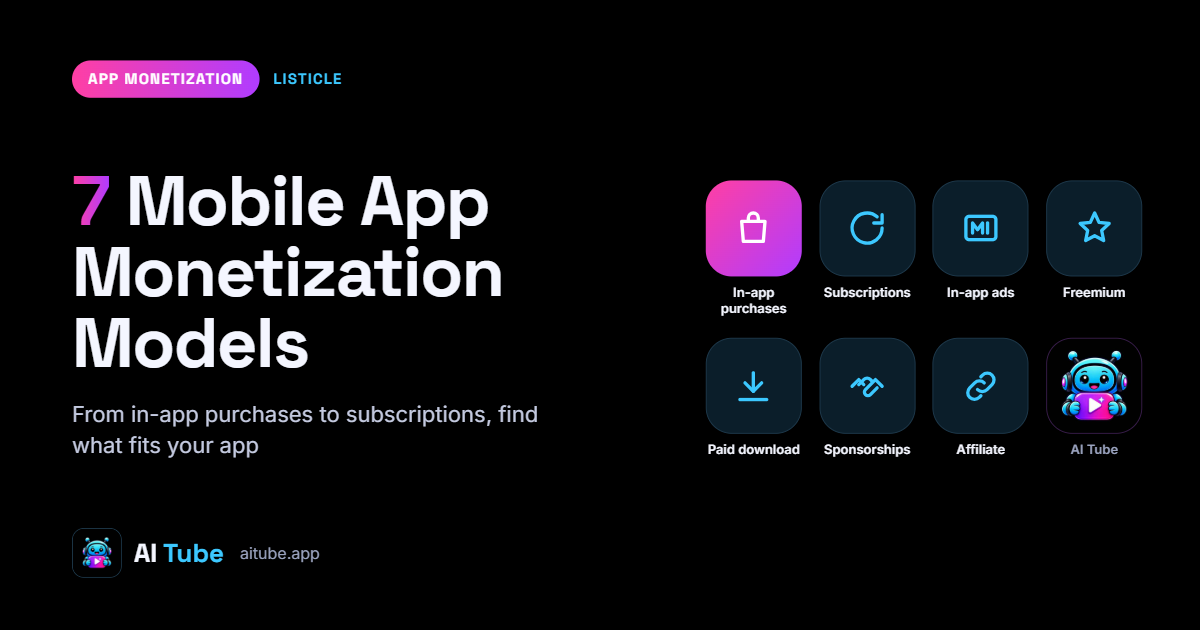
7 Mobile App Monetization Models
1. Freemium model
A freemium app offers basic functionality at no cost and charges for advanced features, higher usage limits, or additional customization.
This can reduce the barrier to trying a new app. Users can experience its value before deciding whether to pay. However, the free version must remain useful, while the paid version needs a clear benefit.
Best suited for: productivity apps, creative tools, AI applications, education platforms, and services with optional advanced features.
2. Subscription model
Subscriptions charge users weekly, monthly, or annually for ongoing access. They can work well when an app continuously provides value through updated content, cloud services, premium tools, or regular improvements.
The main challenge is retention. Users may cancel if they do not use the app regularly or cannot see enough value to justify the recurring cost.
To improve retention, explain what each plan includes, make renewal terms clear, and provide a simple way to manage or cancel subscriptions. Apple explains subscription options and implementation considerations in its official subscription documentation.
3. In-app purchases
In-app purchases let users buy individual features, digital goods, credits, or additional content. Unlike a subscription, a purchase may be used once or remain available permanently, depending on what is being sold.
For example, a creative app might offer additional effects, while an AI tool could sell usage credits for resource-intensive actions.
The pricing should reflect the value delivered. Explain how much usage a purchase provides, whether it expires, and which features it unlocks.
4. In-app advertising
Advertising monetization generates revenue by displaying ads within an app. Common formats include banner ads, interstitial ads, native placements, and rewarded video ads.
Advertising may be suitable for apps with frequent usage and a large audience. However, excessive ads can interrupt important tasks, slow down the experience, or encourage users to uninstall the app.
Use placements that fit the user journey. Rewarded ads, for example, can give users a choice to watch an ad in exchange for an optional benefit where appropriate.
5. Paid downloads
A paid-download model requires users to purchase the app before installing it. This can work when an application solves a specific problem and has enough perceived value to justify an upfront price.
The drawback is that users cannot fully experience the app before purchasing it unless the developer provides a demo, trial, or other preview.
6. Transaction fees and commissions
Some apps connect buyers and sellers, service providers and customers, or businesses and their clients. These applications can earn a percentage or fixed fee from eligible transactions.
This model is common in marketplaces, booking services, and platforms that facilitate payments or purchases. It works best when the app creates clear value for both sides and makes fees easy to understand.
7. Hybrid monetization
A hybrid model combines two or more revenue methods. An app might provide a free tier, paid subscriptions, and optional credit purchases. Another might combine advertising with a premium plan that removes ads.
Hybrid monetization can serve users with different budgets and usage patterns. It also adds complexity, so each revenue method should have a distinct purpose rather than creating multiple charges for the same benefit.
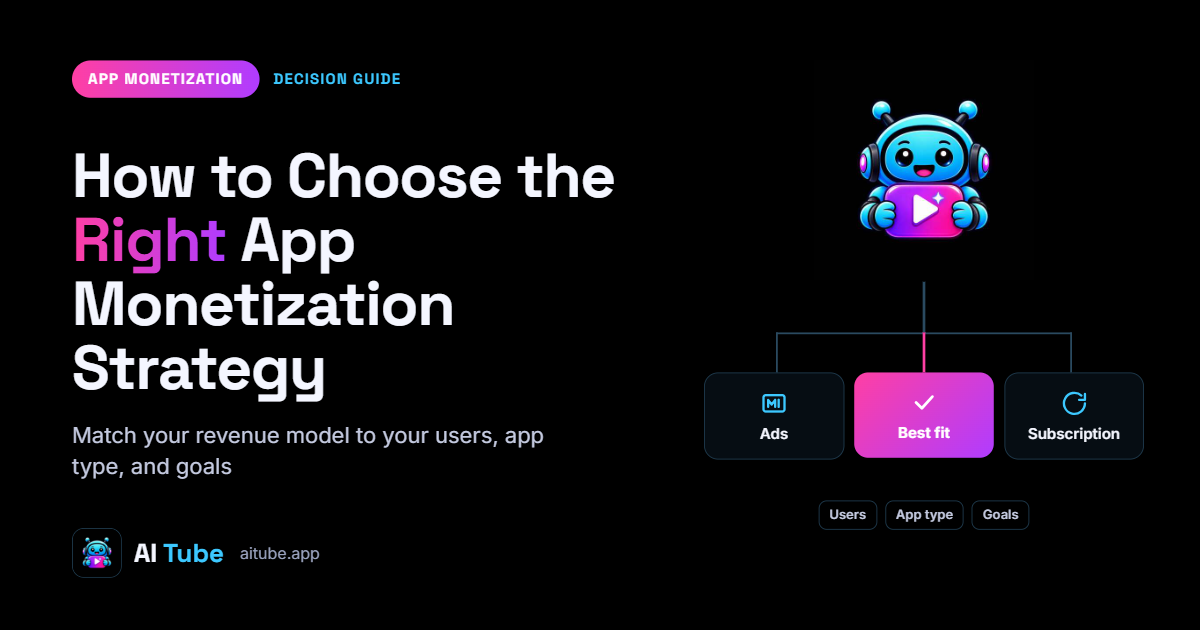
How to Choose the Right App Monetization Strategy
Start with the user’s problem
Identify the main reason people install your app. Does it save time, provide entertainment, help them learn, support creative work, or enable a transaction? Your pricing should connect directly to that value.
Understand usage frequency
Apps used every day may support subscriptions because users receive recurring value. A tool used occasionally may be better suited to one-time purchases or usage-based credits.
Do not force a subscription model onto a product that does not provide ongoing value.
Segment your audience
Different users have different needs. Beginners may prefer a free plan, frequent users may pay for higher limits, and businesses may need team features or centralized administration.
Create clear tiers that reflect meaningful differences in value. Avoid confusing plan names or restrictions that users only discover after signing up.
Review platform rules and fees
App stores have rules for digital goods, subscriptions, and payments. Requirements can differ by platform, app category, region, and transaction type. Review the relevant official documentation before deciding how to process purchases.
For example, Apple describes several app business models and in-app purchase types in its App Store business-model guide. Developers should check the current policies that apply to their particular app.
App Monetization Without Ads
An app can generate revenue without displaying advertising. Options include:
Monthly or annual subscriptions.
One-time purchases for premium features.
Prepaid usage credits.
Paid courses, templates, or digital content.
Business or team plans.
Transaction fees for eligible services.
An ad-free model can offer a cleaner experience, but it still needs a convincing reason to pay. A useful free tier may help people understand the product before upgrading, while paid plans can support users who need more capacity or advanced functionality.
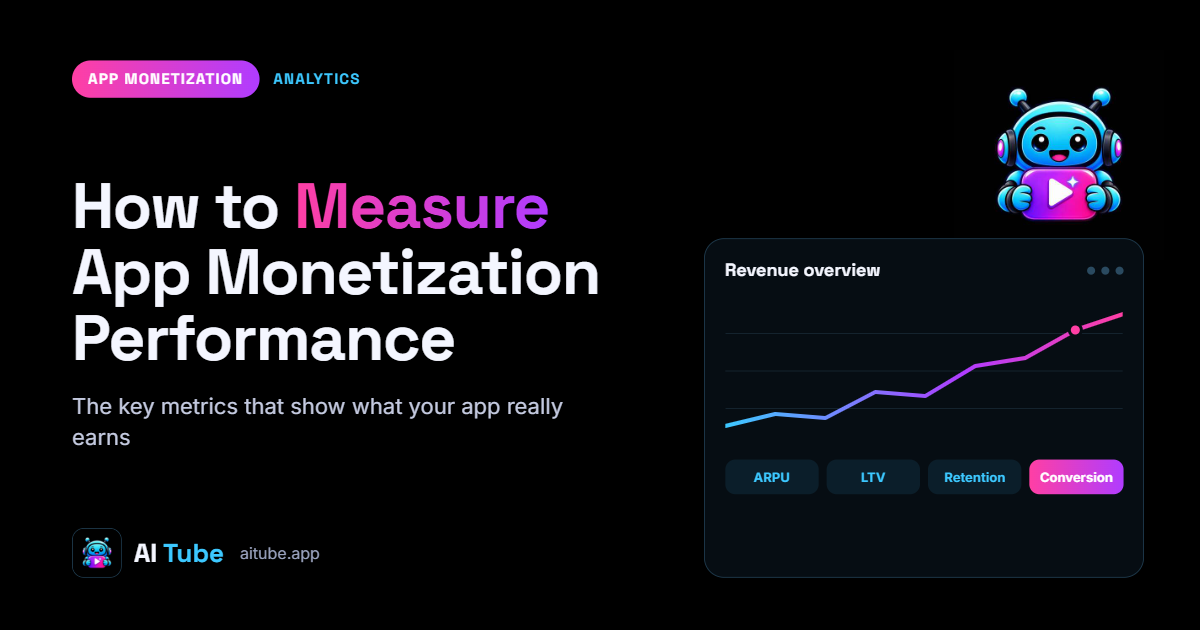
How to Measure App Monetization Performance
Install counts alone do not show whether a monetization strategy is working. Measure the full journey from acquisition to repeat usage and payment.
Conversion rate
The conversion rate measures the percentage of a defined audience that completes a desired action.
Formula:
Conversion rate = (Number of conversions ÷ Number of eligible users or visitors) × 100
For example, if 200 out of 5,000 eligible users purchase a plan, the conversion rate is 4%. Always define the denominator clearly because visitor-to-purchase and trial-to-paid conversion rates measure different things.
Average revenue per user
Average revenue per user (ARPU) measures revenue across a defined user base and period.
Formula:
ARPU = Total revenue during the period ÷ Average number of active users during the period
Use a consistent period and user definition when comparing results.
Retention and churn
Retention measures how many users continue using the app after a defined period. Churn measures the users or paying customers who stop using or paying for the service, depending on the metric definition.
A high initial conversion rate is less valuable if customers cancel immediately. Review retention by acquisition channel, plan, and user cohort to identify where the experience needs improvement.
Lifetime value and acquisition cost
Customer lifetime value estimates the revenue or contribution a customer generates over the relationship. Customer acquisition cost measures the cost of acquiring a customer.
Compare these metrics carefully and use consistent definitions. Revenue-based lifetime value is not the same as profit, and acquisition cost should account for the costs included in your calculation.
Common App Monetization Mistakes
Avoid launching with a pricing model before understanding user needs. Other mistakes include showing too many ads, making cancellation difficult, hiding recurring charges, offering unclear subscription tiers, and relying on downloads rather than revenue and retention metrics.
Do not assume every feature should be paid. A free experience can support discovery and long-term engagement, while premium features should solve meaningful problems.
Also, avoid copying another app’s pricing without considering your own costs, customer expectations, competition, and value proposition.
How AI Apps Can Approach Monetization
AI applications often have variable operating costs because different actions may require different amounts of computing, model usage, storage, or media processing. A simple flat subscription may be easy to understand, but it can become difficult to manage if usage varies greatly between customers.
Possible approaches include subscriptions with fair-use limits, prepaid credits, usage-based billing, or a combination of base access and paid usage. Explain limits clearly and notify users before they reach them.
AITube is an AI-powered video and creator platform. People exploring AI-assisted video workflows can review AITube and its AI Studio to understand the available creation and editing tools. As with any platform, users should check current plan details and terms before making a purchase decision.
Conclusion
A strong mobile app monetization strategy balances revenue with user experience. Freemium access, subscriptions, in-app purchases, advertising, paid downloads, commissions, and hybrid models all have different strengths and trade-offs.
Start by understanding your users, choose a model that fits their behavior, make pricing transparent, and track conversion, retention, and revenue over time. Improve the strategy using actual customer data rather than assumptions. For AI-driven products, pay particular attention to usage costs and explain limits clearly so customers can make informed decisions.